TLDR
LG makes some excellent televisions. Unfortunately, it has also built a smart-TV ecosystem that gives the company an extraordinary amount of continuing power over products customers already paid for.
LG Smart TVs can run Automatic Content Recognition, discover devices on local networks, process voice commands, examine nearby Wi-Fi information for approximate location in connection with ACR, display advertising inside webOS, receive remote software changes, and feed an advertising business built around viewing behavior. LG Ad Solutions openly sells advertisers access to “glass-level” viewing intelligence and audience categories based on programs, apps, streaming services, purchases, rentals, games, advertising exposure, viewing habits, and location. LG Ad Solutions’ ACR technology page
Texas sued LG over its ACR practices and accused the company of deceptive privacy design. LG later entered a 2026 agreement requiring informed consent, clearer disclosures, and a simpler opt-out for viewing-data collection. Researchers working with Gamers Nexus and Level1Techs have separately reported extensive network discovery and security weaknesses, including vulnerabilities that could make a compromised television capable of microphone surveillance. Texas Attorney General’s LG privacy settlement announcement
Taken individually, LG has an explanation for almost everything. Taken together, the picture is rotten. The company sold you the television, collected its money, and then built an entire second business around retaining access to the screen, the software, the advertising inventory, and the behavioral signals generated by the person sitting in front of it.
That is why I consider LG’s smart-TV business profoundly anti-consumer.
LG Sold You the Television and Somehow Still Wants a Piece of It
A television purchase used to be one of the simplest transactions in consumer electronics.
The manufacturer made a television. You paid for it. You brought it home. The television displayed whatever you connected to it, and the manufacturer mostly disappeared from your life.
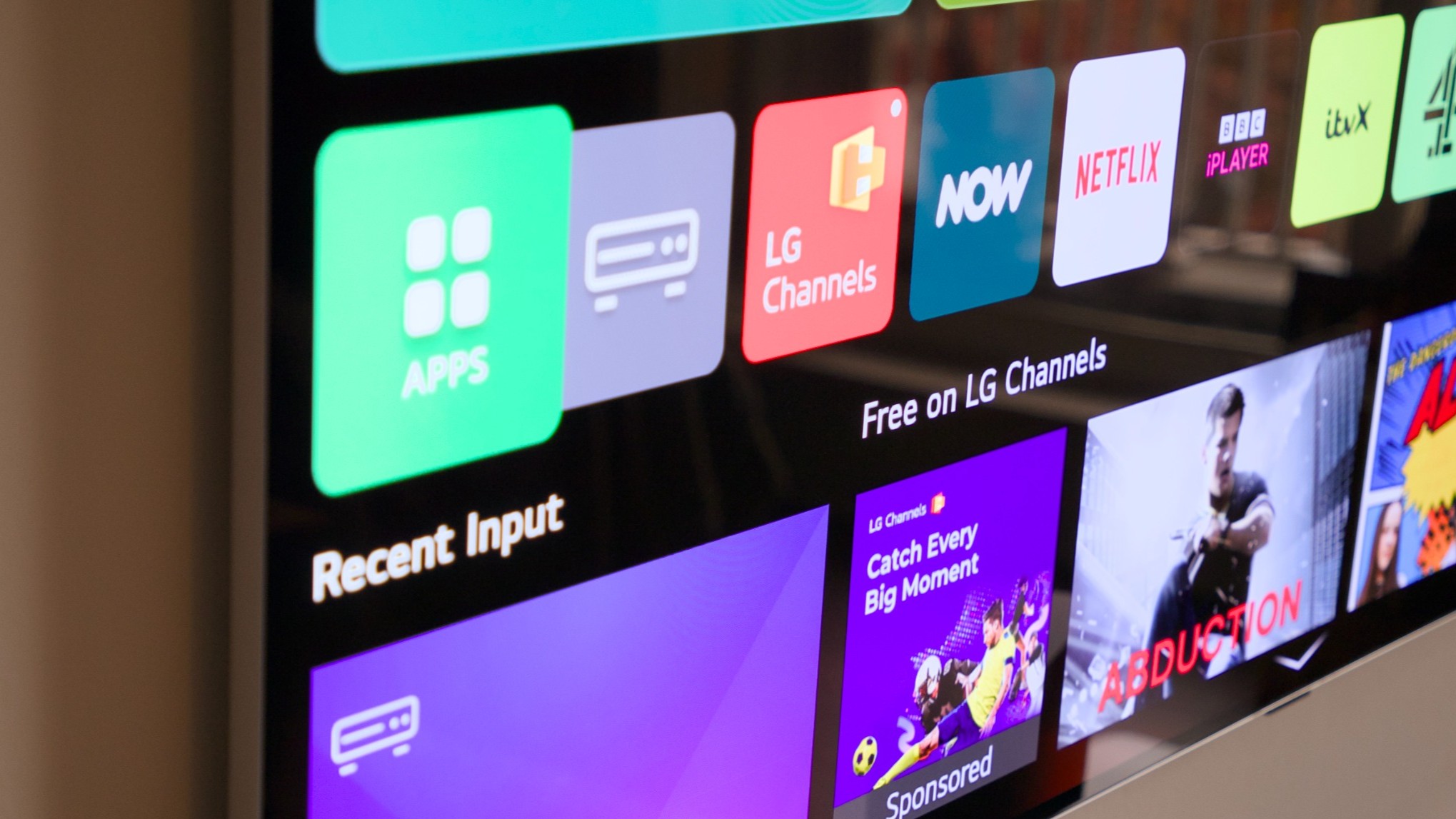
LG and the rest of the smart-TV industry have managed to turn that beautifully simple relationship into something much uglier. Your television is now a computer running an operating system controlled by the manufacturer. That manufacturer can update it, place advertising inside it, ask for new agreements, connect it to cloud services, recognize devices, process behavioral data, and build new revenue streams around your continued use of hardware you already bought.
LG wants consumers to think of this as a collection of smart features.
LG Ad Solutions has a somewhat different vocabulary when talking to advertisers. It boasts that its first-party ACR technology provides information about viewing behavior “at the glass level.” It tells advertisers that it can create audiences based on shows, apps, services, subscriptions, purchases, rentals, games, advertising exposure, viewing habits, and geography. Read LG’s own ACR sales pitch
The customer sees a television.
LG sees infrastructure.
That difference explains most of what follows.
LG’s Advertising Company Literally Tells Marketers to “Own the Living Room”
If you want to understand a company, sometimes you learn more by reading what it tells business customers than what it tells ordinary consumers.
LG Ad Solutions does not merely sell television commercials. Its current sales material tells advertisers that its proprietary ACR captures viewing habits across linear television and streaming. It sells home-screen advertisements integrated directly into the LG Smart TV interface and cross-device advertising that goes beyond the television.
Then it uses this phrase:
“Own the living room.”
LG goes on to describe surrounding the “connected LG household” across mobile phones, tablets, and desktop computers. LG Ad Solutions’ advertiser solutions page
That is an extraordinarily revealing sentence when you stop reading it as an advertiser and start reading it as the person who actually lives in the house.
LG does not own my living room.
The advertiser does not own my living room.
The television manufacturer was invited into the room because I wanted a television. That purchase should not create a permanent commercial beachhead inside my house.
Yet that is increasingly what the smart-TV business has become.
Automatic Content Recognition Turns the Screen Into a Behavioral Sensor
Automatic Content Recognition, or ACR, is one of the core technologies behind this system.
ACR can identify what is appearing on a television by generating fingerprints from content and comparing those fingerprints against reference information. LG says its optional ACR feature can be used for audience segmentation and viewing-trend analysis. The company says current ACR is off by default and requires acceptance of its Viewing Information Agreement. Interest-based and cross-device advertising require separate consent. LG’s current Smart TV privacy statement
Those current consent protections matter. They do not make the underlying technology unimportant.
LG Ad Solutions says its ACR can draw viewing signals from programs, movies, advertisements, gaming content, and streaming apps. The company advertises targeting around premium services, cancellations, purchases, rentals, game titles, consoles, competitor advertisements, ad skipping, app loyalty, and geographic location.
That is much broader than “the TV remembers what episode you watched.”
The screen has become a source of commercially useful behavioral intelligence.
The Television Can Even Recognize Activity From External Sources
One of the biggest conceptual changes is that the television itself occupies a privileged position underneath all the services connected to it.
A streaming service can know what you do inside that streaming service. The television, however, sits at the display layer.
LG’s own current privacy statement acknowledges that ACR can identify content from supported sources when enabled, while its advertising operation describes data from programs, ads, gaming content, and streaming apps as they display on the television.
This is why the phrase “at the glass level” matters.
The glass is the common endpoint.
You might be using an app, cable box, or console, but eventually the television displays what you are doing. That gives a television manufacturer visibility other companies do not necessarily possess.
For advertisers, that is valuable.
For consumers, it is exactly the kind of power that should be tightly constrained.
Then LG’s Television Starts Looking Around the Network
The 2026 Gamers Nexus investigation, conducted with Level1Techs and independent security researchers, added another uncomfortable layer.
Researchers observed LG televisions scanning local networks and discovering unrelated hardware. Ars Technica reported that an LG G5 found dozens of devices, including smartphones and smartwatches belonging to people who did not even know they were part of the test environment. Gamers Nexus characterized the scanning as native TV functionality rather than behavior requiring a security exploit. Ars Technica’s report on LG network scanning
LG acknowledges that its televisions use device discovery. The company says this exists to recognize compatible equipment such as set-top boxes, game consoles, DVD players, and IoT products, and it says device-discovery information is not used for household profiling or advertising segmentation.
That is LG’s defense, and there are legitimate uses for device discovery.
But the consumer-rights question remains obvious: why should a television know anything about unrelated devices unless the owner explicitly asks those devices to interact?
The safest TV on your network is one that minds its own business.
LG Also Says Nearby Wi-Fi Information Can Help Estimate Location
LG’s own rebuttal to the recent privacy controversy contains another revealing admission.
The company says nearby Wi-Fi access-point information and signal-strength information are processed separately from device discovery. Where ACR is available and enabled, LG says that information may help estimate the television’s approximate location in support of ACR services.
Again, LG has a technical explanation.
The problem is that every explanation reveals another layer of complexity that a television simply did not need before the smart-TV era.
Your television can process nearby wireless-network information to help estimate location for a content-recognition system whose output can contribute to audience analysis.
Read that sentence slowly.
This is what we have normalized in an appliance people primarily buy because they want to watch movies.
Then There Are the Security Problems
Privacy arguments about LG often get muddled with security findings, so it is important to separate the two.
LG strongly disputes claims that ordinary, uncompromised televisions continuously record ambient conversations. It says voice recognition is off by default, wake-word detection occurs locally, and audio without a recognized wake word is not stored, converted to text, or transmitted.
That is different from what researchers demonstrated after compromising a TV.
Malwarebytes reported that researchers working on the Gamers Nexus investigation found security weaknesses that could increase the consequences of a compromise, including the ability for a compromised television to capture audio. Malwarebytes specifically updated its reporting to clarify that the ambient-audio demonstration involved a compromised television and does not show that ordinary LG TVs routinely record conversations. Malwarebytes on the reported LG TV security flaws
That distinction protects LG from one accusation.
It does not make the security story reassuring.
If researchers can turn a microphone-equipped television into a listening device by exploiting vulnerabilities, that is still a serious security failure. “We are not personally spying on you” is not a complete defense if the product is capable of becoming someone else’s surveillance tool.
Smart Features Create Attack Surface
This is where the problem becomes structural.
Every capability adds software.
Every piece of software creates potential bugs.
Every additional privilege increases the damage those bugs can cause.
Voice assistants require microphones and audio-processing code. Smart-home integrations require network discovery. ACR requires content analysis. Streaming requires internet access. Advertising requires connections to commercial systems. Updates require a long-term software relationship with LG.
The old television had fewer features, but it also had dramatically fewer ways to betray its owner.
It could not scan your LAN.
It could not run vulnerable network services.
It could not process voice commands.
It could not participate in an advertising graph.
Its stupidity was a security feature.
Texas Accused LG of Manipulating Privacy Consent
Then there is the interface itself.
Texas did not merely complain that LG collected viewing information. The state’s 2025 lawsuit specifically accused LG of using unlawful dark patterns in its consent and privacy controls.
Texas alleged that LG offered consumers a convenient one-click Select All option during setup while completely reversing those permissions later could require more than 40 clicks across multiple menus. The state explicitly described this disparity as examples of “Privacy Zuckering” and a “Roach Motel.” Read the relevant section of Texas’s complaint against LG
The complaint also described the setup screen presenting consumers with multiple agreements, including Viewing Information, Voice Information, Interest-Based and Cross-Device Advertising, Marketing Communications, and others. Texas argued that this overload occurred during initial setup, when consumers were trying to finish configuring the television and start using it.
That is exactly how dark patterns work.
You do not need to eliminate choice.
You simply make the company-friendly choice easier.
The Backwards “Do Not Sell” Switch Is Almost Comically Bad
LG’s privacy interface contains an especially absurd example.
Consumer Reports tells LG owners that if they want LG to limit third parties from commercializing their information, they must activate the setting labeled Do Not Sell My Personal Information. Consumer Reports’ LG privacy-settings guide
Think about the interaction logic.
The other optional tracking and advertising agreements are things you decline or switch off to increase privacy.
Then you reach:
Do Not Sell My Personal Information
and the privacy-protecting action is suddenly to switch it on.
LG has not publicly admitted that this was designed to trick customers.
It does not need to for me to form an opinion about it.
LG is not stupid. This is a corporation capable of building OLED panels, designing webOS, operating global cloud infrastructure, analyzing consumer behavior, and running a sophisticated advertising company. It is ridiculous to believe LG somehow failed to understand that making one critical privacy control operate in the opposite direction from the surrounding controls could confuse people.
Someone designed it.
Someone reviewed it.
Someone shipped it.
And every bit of confusion happened to favor LG’s commercial interests.
Texas Eventually Forced the Issue
Texas sued LG, and the dispute ended in an agreement announced on May 11, 2026.
Under that agreement, Texas said LG would no longer use ACR to collect viewing data without informed consent. LG also agreed to display clearer disclosures explaining how viewing information may be collected and used and provide consumers with a clear and simple way to opt out.
A settlement is not a trial verdict proving every allegation in Texas’s complaint.
But the practical result is difficult to ignore.
Regulators attacked LG’s consent and disclosure practices.
LG agreed to make consent, disclosure, and opting out clearer.
LG does not deserve a medal for being pushed toward the privacy design it should have used from the beginning.
And Then There Is Serge Matta
LG’s leadership choices do not exactly improve the trust problem.
LG Ad Solutions currently lists Serge Matta as President, Global Ad Sales. LG Ad Solutions leadership page
Matta previously served as CEO of Comscore. In 2019, the SEC charged Comscore and Matta with accounting-and-disclosure fraud. The SEC said Comscore, at Matta’s direction, entered transactions intended to improperly increase reported revenue, made false and misleading disclosures, and created an illusion of steady business growth. Matta settled without admitting or denying the findings, paid a $700,000 penalty, reimbursed Comscore $2.1 million, and accepted a ten-year prohibition on serving as an officer or director of a public company. SEC’s announcement of the Comscore and Serge Matta case
That history does not prove LG Ad Solutions is currently committing fraud.
It does tell consumers something about LG’s judgment.
This is the company asking consumers to trust a complex behavioral-data and advertising operation, and one of its senior sales executives has that regulatory history.
I am entitled to find that repulsive.
“We Own the Glass” Is the Perfect Summary of the Problem
The Gamers Nexus investigation also highlights footage of LG advertising executives discussing the idea that LG “owns the glass.” Gamers Nexus describes LG leadership talking about knowing household members, other devices, and moving advertising relationships from televisions to smartphones and other screens. Watch the Gamers Nexus LG investigation
Advertising jargon can explain the phrase.
It cannot make it less revealing.
LG does not literally own your television after selling it. But commercially, control of webOS and the screen gives LG continuing access to advertising inventory and first-party data generated from that device.
The consumer says:
I bought the TV.
LG Ad Solutions says:
We own the glass.
That conflict is the whole smart-TV privacy problem in five words.
LG’s Political Advertising Business Shows How Far the Machine Goes
LG’s 2026 political advertising materials make the scale of its advertising ambitions especially clear.
LG Ad Solutions advertises access to 49 million LG Smart TVs and more than 363 million connected devices in the United States, along with first-party ACR data, custom voter segments, home-screen placements, third-party audience enrichment, and cross-device targeting. It again uses the language “Own the living room.” LG Ad Solutions’ 2026 political advertising pitch
The point here is not partisan.
The problem exists regardless of who buys the advertisement.
A television inside a private home has become infrastructure for sophisticated political audience targeting.
That is a remarkable transformation from the appliance consumers thought they were buying.
LG’s Current Privacy Defense Actually Proves How Much Power the TV Has
LG published a lengthy privacy statement on September 12, 2026, responding to recent criticism.
The statement is meant to reassure consumers. In some respects, it does. LG says optional ACR, voice recognition, and interest-based advertising require opt-in consent. It says users can disable those features and continue using core smart-TV functionality.
But read the full statement and notice how much the television is doing.
LG discusses:
- voice recognition;
- wake-word processing;
- ACR;
- device discovery;
- HDMI-connected sources;
- IoT products;
- nearby Wi-Fi information;
- approximate-location estimation;
- viewing information;
- interest-based advertising;
- cross-device advertising;
- software updates;
- data deletion;
- security updates.
Read LG’s complete September 2026 privacy response
LG’s defense unintentionally illustrates the larger problem beautifully.
This thing became far more than a television.
LG Makes Great Hardware. That Is Not an Excuse.
The frustrating part is that LG makes displays people genuinely want.
Its OLED televisions can be excellent.
That should make the company’s behavior more embarrassing, not less.
LG does not need to squeeze every possible commercial opportunity out of a person who already paid thousands of dollars for premium hardware.
Build the television.
Sell the television.
Support the television.
Secure the television.
Then leave the owner the hell alone unless they explicitly ask for something else.
That is not anti-technology.
That is basic respect for ownership.
The Smart-TV Business Is Structurally Hostile to Privacy
LG is not the only offender. ACR, advertising, telemetry, and data-driven smart-TV platforms exist across the industry.
That does not excuse LG.
It tells us the problem is structural.
The manufacturer now has an incentive to make a great television and an incentive to gather commercially valuable behavioral information from the television after the sale.
Those incentives can conflict.
The consumer wants privacy.
The advertising company wants signals.
The consumer wants a clean home screen.
The advertising company wants inventory.
The consumer wants the TV to know as little as possible.
The advertising operation wants richer audience intelligence.
This is why “just trust us” is not a serious privacy policy.
LG Has Been Given Too Much Power Inside the Home
When you put all of this together, the individual explanations stop being reassuring.
LG says ACR is useful.
LG says device discovery is useful.
LG says nearby Wi-Fi information helps location estimation.
LG says voice features are useful.
LG says advertising agreements are optional.
LG says network discovery is standard.
Fine.
The bigger question is why a television manufacturer has accumulated this much technical and commercial power inside private homes at all.
The television can observe the screen.
It can communicate over the network.
It can discover devices.
Some models can hear voice commands.
It can receive remote software changes.
Its operating system can display advertisements.
Its advertising arm can turn viewing information into marketable audiences.
And researchers say vulnerabilities can turn some of those capabilities against the owner if the device is compromised.
That is far too much trust to give a company merely because it makes a good OLED panel.
LG Is an Anti-Consumer Privacy Parasite
That phrase is deliberately harsh.
I mean it.
LG sold customers the hardware. Then the smart-TV business created ways to keep extracting commercial value from what happens on that hardware after the sale.
The company’s advertising arm talks about owning the living room.
Its technology page talks about viewing behavior at the glass level.
Texas accused it of dark patterns and forced stronger privacy protections.
Researchers found native network scanning and reported meaningful security weaknesses.
Its privacy controls included a backwards Do Not Sell switch.
Its current advertising leadership includes an executive who previously settled SEC fraud charges and accepted a decade-long public-company leadership ban.
Every individual fact has context.
The cumulative picture is still terrible.
A television should serve the person who bought it.
LG’s smart-TV ecosystem too often looks like it serves LG first.
That is the problem.
References
LG Electronics, “Understanding Privacy on LG Smart TVs,” September 12, 2026. LG’s current explanation of ACR, voice recognition, device discovery, nearby Wi-Fi processing, approximate-location estimation, consent, and security.
Read LG’s full privacy statement
LG Ad Solutions, “Trusted ACR Technology.” LG’s own advertiser-facing description of glass-level viewing data and audience targeting based on content, purchases, advertising exposure, gaming, viewing behavior, and location.
Read LG Ad Solutions’ ACR technology page
LG Ad Solutions, “Superior Solutions for Performance Advertisers.” Describes LG home-screen ads, ACR, and its “Own the living room” cross-device pitch.
Read LG Ad Solutions’ solutions page
Texas Office of the Attorney General, LG privacy settlement, May 11, 2026. Details informed-consent, disclosure, and opt-out requirements resulting from Texas’s case against LG.
Read the Texas-LG privacy settlement announcement
State of Texas v. LG Electronics U.S.A., Inc., Original Petition, December 2025. Includes Texas’s allegations concerning ACR, dark patterns, one-click consent, 40-plus-click withdrawal, and deceptive privacy design.
Read Texas’s complaint against LG
Gamers Nexus, “216,000,000 Spy TVs | The LG Smart TV Problem,” September 6, 2026. Investigation into LG ACR, network behavior, dark patterns, security vulnerabilities, ambient-audio exploitation, and LG Ad Solutions.
Watch the Gamers Nexus investigation
Ars Technica, “LG TV Shown Scanning LAN for Third-Party Phones and Other Devices,” September 8, 2026. Reporting on LAN enumeration and LG’s response.
Read the Ars Technica report
Malwarebytes, “LG TV Flaws Could Let Attackers Listen In, Even in Standby Mode,” September 7, 2026. Security-focused analysis and clarification concerning compromised versus uncompromised TVs.
Read the Malwarebytes report
U.S. Securities and Exchange Commission, “SEC Charges Comscore Inc. and Former CEO with Accounting and Disclosure Fraud,” September 24, 2019. Documents Serge Matta’s SEC case, penalty, reimbursement, and ten-year officer/director bar.
Read the SEC’s Serge Matta announcement
LG Ad Solutions, Leadership Team. Current listing of Serge Matta as President, Global Ad Sales.
View LG Ad Solutions’ leadership team